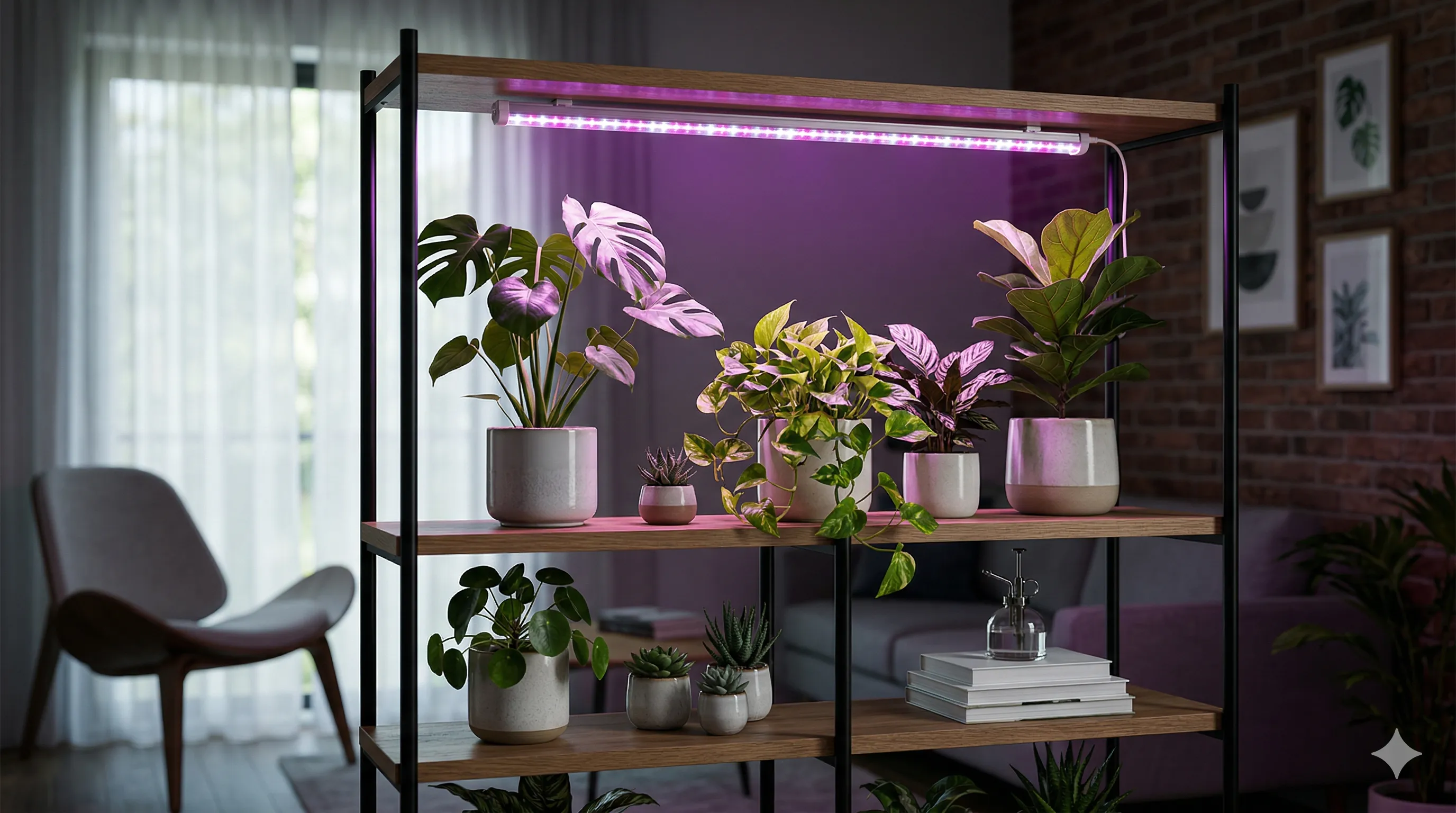
Living in a dark apartment or dealing with gloomy winters? Your plants don't have to suffer. Grow lights have come a long way—today's LED options are affordable, energy-efficient, and actually look decent in your home. Here's everything you need to know to get started.
Do You Need Grow Lights?
Not every plant needs supplemental lighting. But if you're experiencing any of these, grow lights can help:
- North-facing windows or few windows
- Plants leaning dramatically toward light
- New leaves coming in smaller or paler
- Long, leggy stems with sparse leaves
- Plants that won't flower indoors
- Winter months with short, dark days
Understanding Light Basics
Light Spectrum
Plants primarily use red and blue light for photosynthesis. Old-school grow lights had that purple glow because they only produced these colors. Modern full-spectrum LEDs produce white light that includes all the wavelengths plants need—and looks natural in your home.
Light Intensity
Light intensity decreases dramatically with distance. A light that's perfect at 6 inches might be useless at 24 inches. This is why placement matters more than wattage.
Duration
Most houseplants need 10-14 hours of light per day. Grow lights should supplement natural light, not replace the dark period entirely. Plants need rest too—don't run lights 24/7.
Types of Grow Lights
LED Strip Lights
The most popular choice for home growers. They're thin, run cool, use minimal energy, and can fit almost anywhere. Brands like Barrina make affordable strips that are perfect for shelves.
- Pros: Cheap, cool-running, slim profile, linkable
- Cons: Need mounting, limited coverage width
- Best for: Shelves, under-cabinet setups, multiple plants in a row
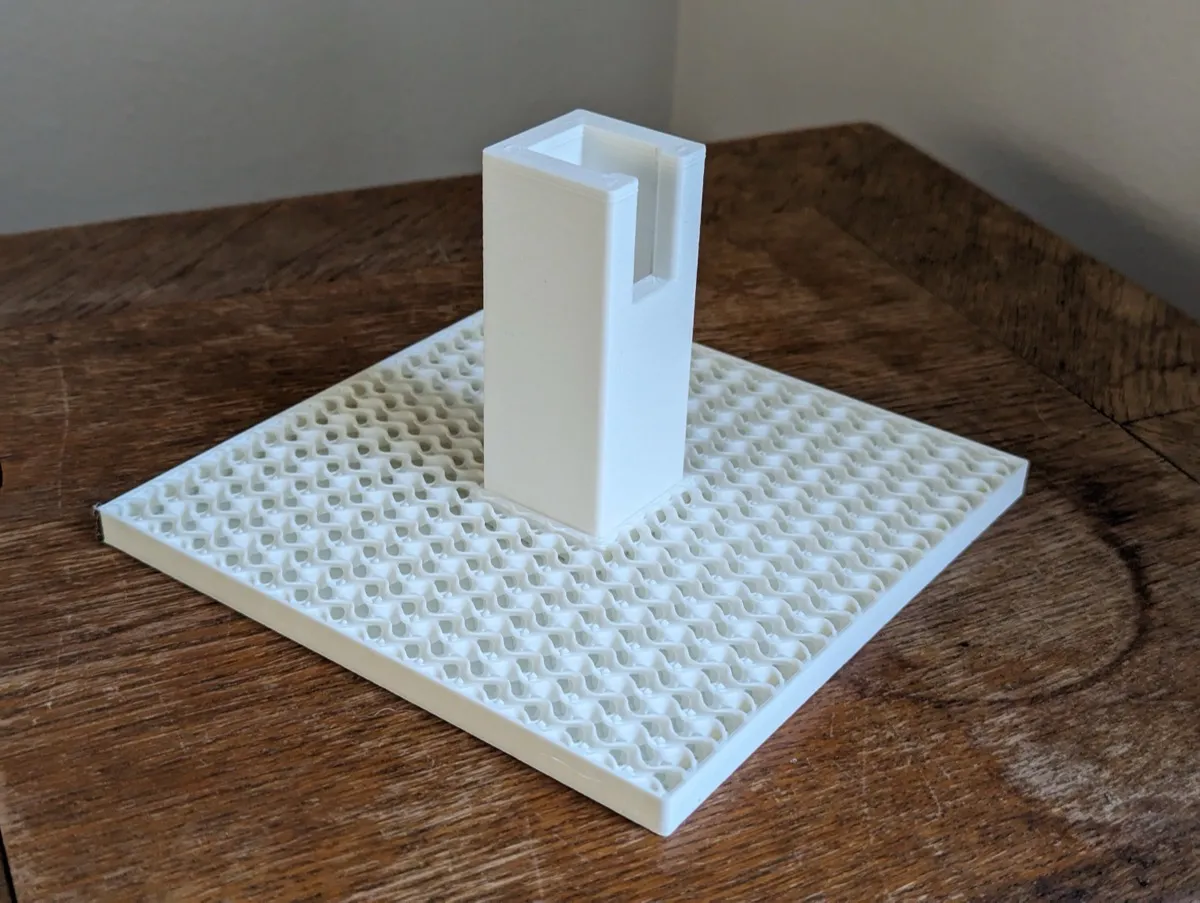
Barrina T5 Grow Light Stand
Custom 3D printed stand designed specifically for Barrina T5 LED grow lights. Easy setup, clean look, perfect height for shelf plants.
$24.95LED Bulbs
Screw into any standard lamp. Easiest way to add light to a single plant or small group. Look for bulbs labeled "full spectrum" or specifically for plants.
- Pros: Simple setup, works with existing fixtures
- Cons: Limited coverage, might need multiple bulbs
- Best for: Single plants, desk setups, easy upgrades
Panel Lights
Larger flat panels that cover more area. Great for plant shelves or larger collections. Many have adjustable brightness and built-in timers.
- Pros: Wide coverage, often have timers built in
- Cons: Bulkier, more expensive, need mounting
- Best for: Dedicated plant shelves, serious collectors
Skip the purple lights. Full-spectrum white LEDs work just as well and won't make your living room look like a nightclub. Your plants don't care about the color—they just need the right wavelengths, which white LEDs provide.
How to Set Up Grow Lights
Placement
Position lights 6-12 inches above your plants for most houseplants. Succulents and cacti can handle lights closer; ferns and low-light plants prefer them further away. Watch for signs of stress:
- Too close: Bleached or burnt leaves, curling away from light
- Too far: Stretching toward light, leggy growth
The Mounting Challenge
The hardest part of using strip lights is mounting them. Traditional setups require drilling into shelves or installing under-cabinet fixtures. But there's an easier way.
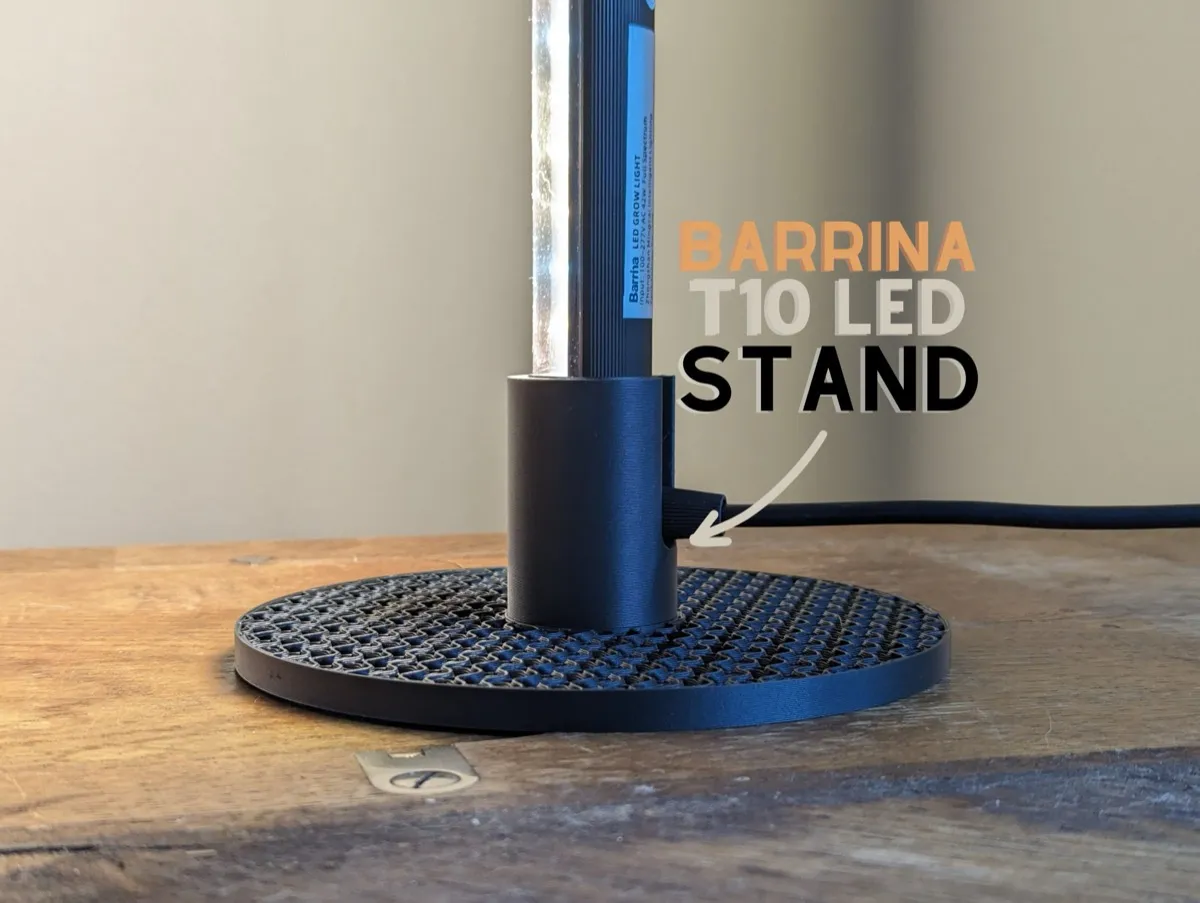
Barrina T10 Grow Light Stand
Our wider stand for larger Barrina T10 lights. Great for covering more plants on a shelf or table setup.
$24.95No-Drill Grow Light Setup
Our Light Stand holds Barrina LED strips vertically between your plants. No drilling, no shelf modifications. Just place it on your shelf and plug in.
Shop Light Stand →Timing
Invest in a timer—you won't remember to turn lights on and off every day. Mechanical timers cost a few dollars. Smart plugs let you control lights from your phone and set schedules.
A typical schedule:
- Low light plants: 8-10 hours
- Medium light plants: 10-12 hours
- High light plants: 12-14 hours
Common Mistakes to Avoid
1. Buying Based on Wattage
Wattage tells you energy consumption, not light output. A 20W LED can outperform a 60W incandescent. Look at lumens (light output) and coverage area instead.
2. Placing Lights Too Far Away
Light intensity drops quickly with distance. That light mounted on your ceiling isn't doing much for plants on a table below. Get lights close to your plants.
3. Forgetting About Heat
While LEDs run cooler than old bulbs, they still produce some heat. Make sure there's airflow, and don't place lights where they'll bake your plants.
4. Running Lights 24/7
Plants need dark periods to process the energy they've collected. Running lights around the clock can stress plants and disrupt flowering.
Our Recommendation for Beginners
Start simple with a 2-foot Barrina LED strip light (around $15-20) and a basic timer. Mount it above a shelf of plants or use a vertical stand. This setup will cover 2-3 medium plants and make a noticeable difference within weeks.
Once you see the results, you'll probably want more lights. Most of us end up with a shelf full of happy plants and a slight grow light addiction. There are worse hobbies.