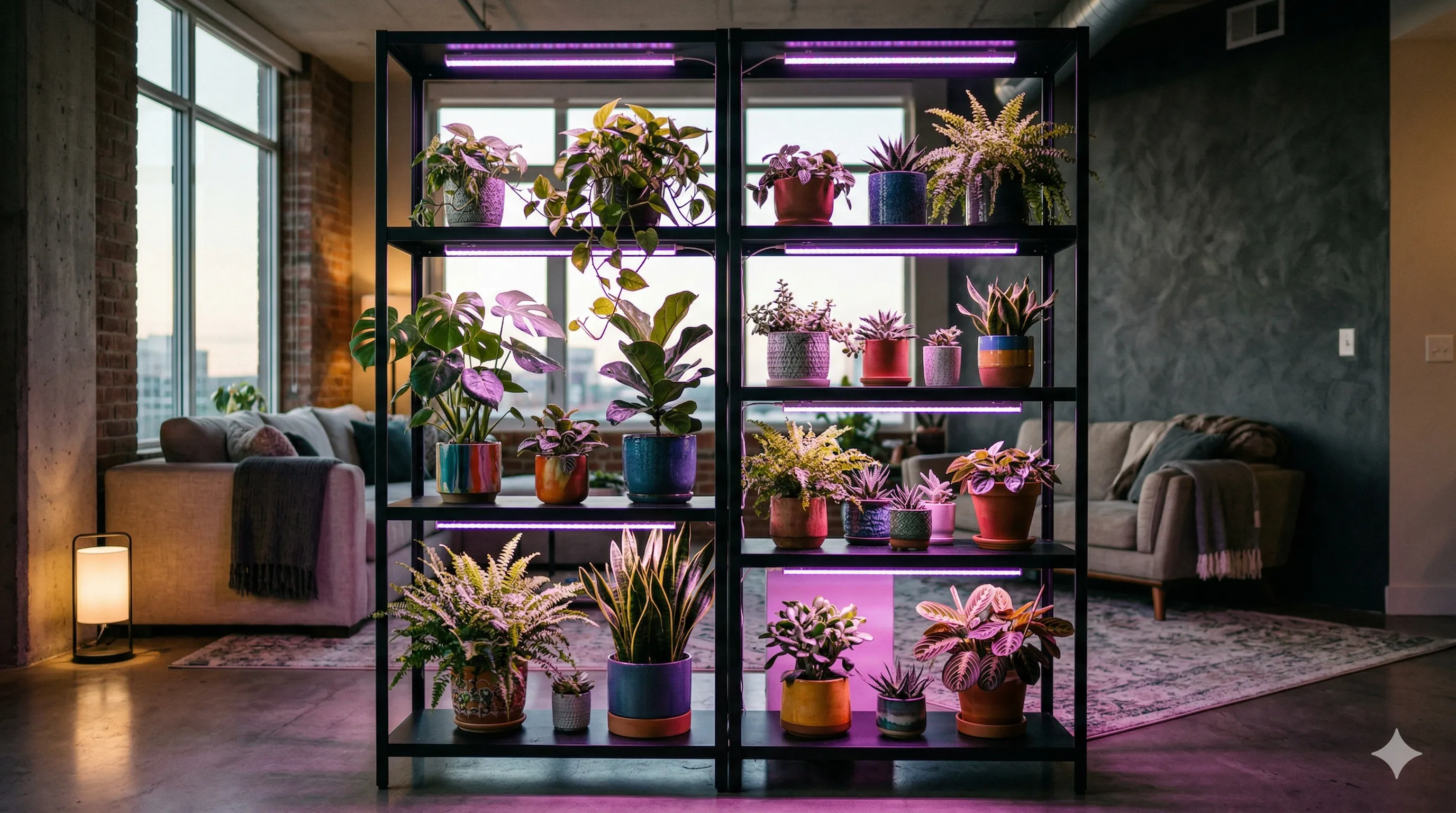
A dedicated plant shelf with grow lights is one of the best upgrades you can make to your indoor garden. It lets you grow plants that would otherwise struggle with your home's natural light, keeps your collection organized in one spot, and turns a corner of your room into something genuinely beautiful. But getting the setup right matters. A poorly planned shelf wastes electricity, burns leaves, or leaves plants stretching and leggy.
This guide walks through every step of building a functional, good-looking plant shelf with grow lights, from choosing the shelf itself to dialing in the light placement.
Step 1: Choosing the Right Shelf
The shelf you choose sets the foundation for everything else. Not every bookshelf or storage rack works well for plants, so it's worth being intentional about what you pick.
Wire Shelving Units
Metal wire shelving racks are the most popular choice among serious indoor gardeners, and for good reason. The open wire design allows light to pass through from above, which means plants on lower shelves still get some ambient light from the fixtures above them. The shelves are adjustable, so you can change the spacing as plants grow. They're also sturdy enough to handle the weight of multiple pots with wet soil, which adds up faster than you'd expect.
The standard 48-inch wide by 18-inch deep wire rack is the sweet spot for most setups. It gives you enough surface area to fit several medium plants per shelf without being so deep that the plants in the back are hard to reach for watering.
Wooden Bookshelves
Wooden shelves look better in a living space but come with trade-offs. Solid shelves block light from reaching plants below, so each shelf level needs its own light fixture. Wood is also more susceptible to water damage, so you absolutely need trays under every pot. The aesthetic payoff can be worth it if the shelf is in a visible area of your home, but be prepared for a bit more planning and maintenance.
Shelf Depth Matters: Avoid shelves deeper than 20 inches for grow light setups. Most affordable grow light bars are designed for 18 to 24-inch coverage widths. A deeper shelf means the plants in the back won't get adequate light, and you'll end up rotating them constantly.
Step 2: Selecting and Placing Your Grow Lights
For shelf setups, T5 or T8 LED light bars are the go-to option. They're slim enough to mount under the shelf above, they run cool so they won't overheat in an enclosed space, and they provide a wide, even spread of light across the shelf surface. Full-spectrum white LEDs with a color temperature around 4000K to 6500K work well for the widest variety of houseplants.
How Many Lights Per Shelf?
This depends on what you're growing and the width of your shelf. For a standard 48-inch wide shelf with moderate-light plants like pothos, philodendrons, and ferns, a single 42-inch light bar centered on the shelf is usually sufficient. For higher-light plants like succulents, cacti, or variegated plants that need strong light to maintain their coloring, run two bars per shelf spaced evenly apart.
If your shelf is narrower, around 24 to 30 inches, a single light bar per level will cover the full width comfortably. The key measurement to watch is the distance from the light to the tops of the plants.
Light Distance and Intensity
Most LED grow light bars should be positioned 6 to 12 inches above the tops of your plants. Closer placement gives more intense light, which is great for sun-loving species but can scorch delicate leaves. Farther placement spreads the light more evenly but reduces intensity.
- 6 to 8 inches: High-light plants like succulents, cacti, string of pearls, and variegated monsteras.
- 8 to 10 inches: Medium-light plants like pothos, philodendrons, peperomias, and calatheas.
- 10 to 12 inches: Low-light tolerant plants like snake plants, ZZ plants, and ferns that need a gentle boost.
If you're using a standalone light stand rather than mounting bars under the shelf above, you get more flexibility to adjust the height. A freestanding stand works especially well on desks or tabletops where you have just a few plants to supplement.
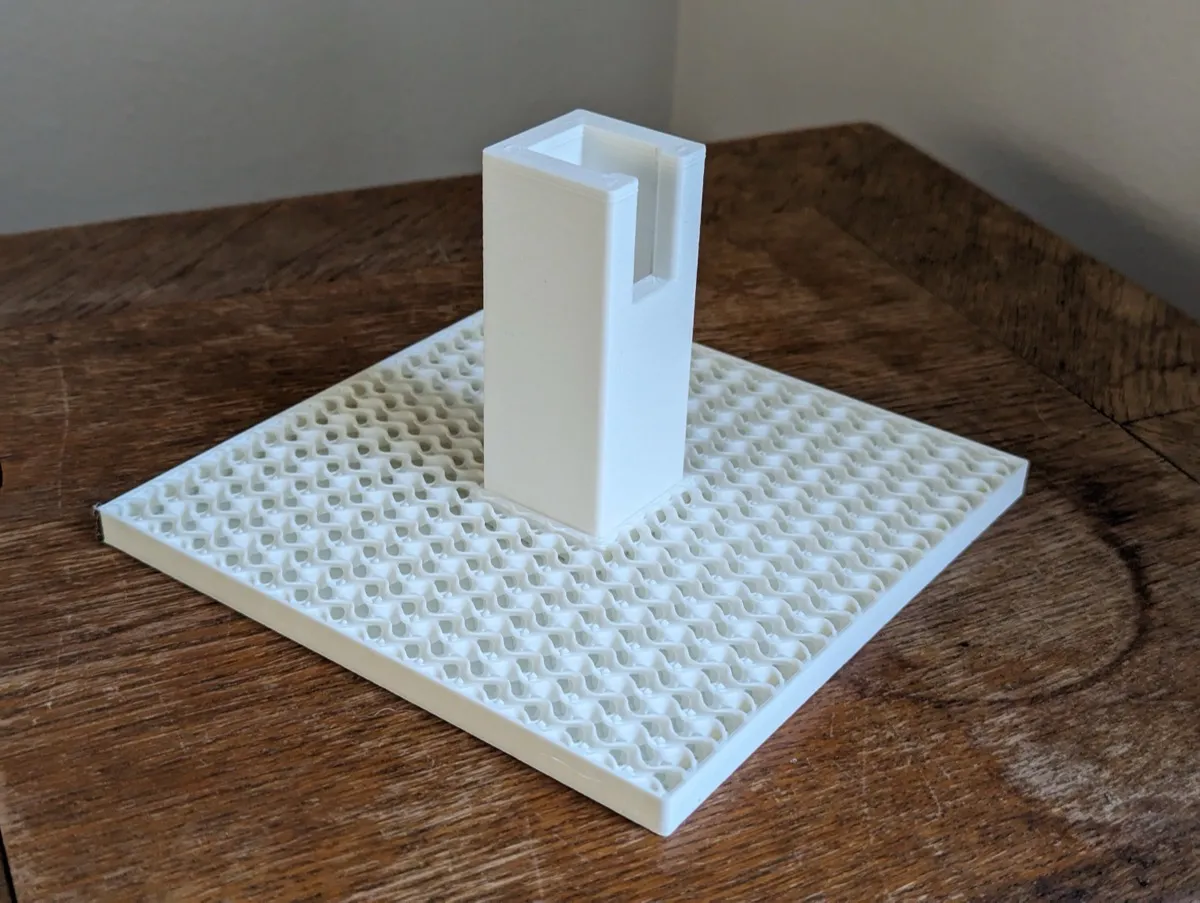
Barrina T5 Light Stand
A purpose-built stand for the popular Barrina T5 grow light bar. Positions your light at the ideal height above your plants without drilling, clamping, or mounting hardware.
Step 3: Wiring and Cable Management
Grow light setups can quickly turn into a cable nightmare if you don't plan ahead. Most LED light bars are daisy-chainable, meaning you can connect multiple bars to a single power outlet using short linking cables. This is a huge advantage because it means one timer controls all the lights on the shelf simultaneously.
Route power cables along the back leg or side of the shelf and secure them with cable clips or small zip ties. If your shelf is against a wall, the cables should be virtually invisible from the front. Use a power strip mounted to the back of the shelf frame to keep plugs organized and off the floor.
Timer Setup: Put your grow lights on a simple outlet timer set to 12 to 14 hours on, 10 to 12 hours off. Plants need a dark period for healthy growth. Running lights 24/7 actually stresses most houseplants rather than helping them. Set the on-cycle to start in the morning so the lights are off during the evening when you're relaxing.
Step 4: Protecting Your Shelves from Water Damage
Water and shelving don't mix well, especially with wooden shelves. Even wire shelving can develop rust over time if water is consistently pooling on the support bars. Every pot on your plant shelf needs a drainage tray underneath, no exceptions.
Raised trays are particularly valuable in a shelf setup because they catch the runoff from thorough waterings while keeping the pot base dry. This matters more on shelves than on standalone surfaces because a water spill on a shelf can drip down onto the plants below, creating a cascade of mess.
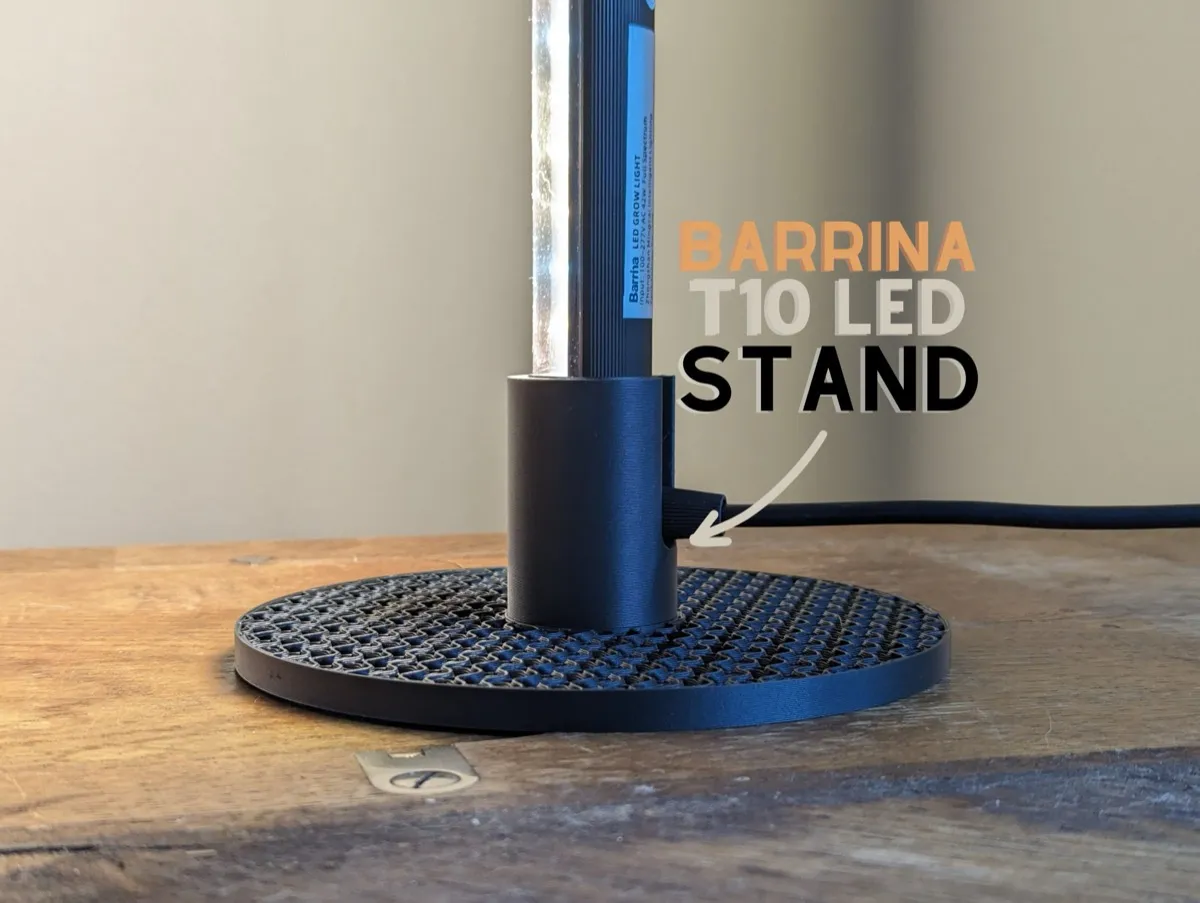
Barrina T10 Light Stand
Designed for the larger Barrina T10 grow light bar, this stand provides stable, adjustable positioning for broader light coverage across your plant shelf.
Step 5: Which Plants Thrive on Grow Light Shelves
Almost any houseplant will grow well under properly set up grow lights, but some truly come alive in this kind of controlled environment. Here are the categories that benefit most:
Tropical Foliage Plants
Philodendrons, monsteras, alocasias, and anthuriums all love the consistent, bright indirect light that a shelf setup provides. These are the plants that tend to get leggy and sparse in low-light apartments, and they respond dramatically to supplemental lighting with faster growth, larger leaves, and deeper coloring.
Variegated Plants
Variegated plants need more light than their non-variegated counterparts because the white or cream portions of their leaves don't photosynthesize. Under a grow light, variegated monsteras, pothos, and hoyas maintain their striking patterns instead of reverting to all-green growth.
Succulents and Cacti
If you live in a climate or apartment without strong direct sunlight, a grow light shelf is the only reliable way to keep succulents compact and colorful. Without enough light, succulents stretch out (etiolate) and lose their rosette form. Place them on the shelf closest to the light for maximum intensity.
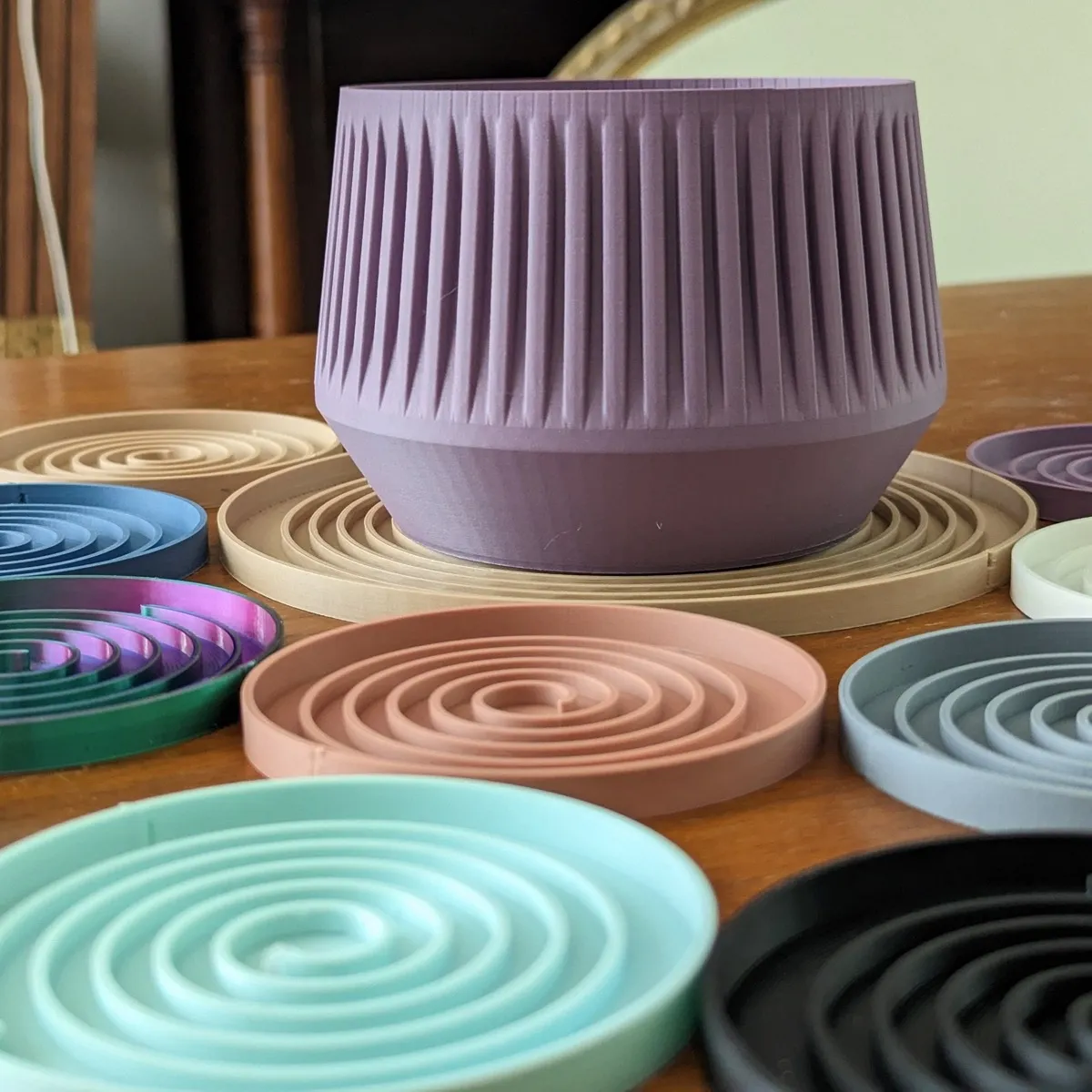
Spiral Tray
Keep your shelf setup clean and your plants healthy. The raised spiral pattern lifts pots above drainage water, preventing shelf damage and root rot in one elegant design.
Common Mistakes to Avoid
Even with the right equipment, a few common missteps can undermine your plant shelf setup:
- Overcrowding the shelves. Plants need air circulation. Packing them too tightly encourages fungal problems and makes watering a chore. Leave at least an inch of space between pots.
- Ignoring the back row. Plants at the back of deep shelves get less light and are easy to forget during watering. Rotate them forward periodically, or stick to shallow shelves.
- Using the wrong light spectrum. Blurple (blue and red) grow lights work but make your living space look like a science experiment. Full-spectrum white LEDs grow plants just as effectively and look natural in your home.
- Skipping the timer. Manually turning lights on and off means inconsistent photoperiods and forgotten dark cycles. A basic $8 outlet timer pays for itself in plant health.
- Forgetting about heat. While LEDs run cool compared to older lighting technology, they still generate some warmth. Make sure there's airflow above and around your light fixtures, especially on enclosed wooden shelves.
A well-planned plant shelf with grow lights transforms what's possible with indoor gardening. Plants that once struggled in a dim apartment corner will push out new growth consistently, and your collection will look organized and intentional instead of scattered across every windowsill in the house.
Complete Your Grow Light Setup
The Barrina T5 Light Stand positions your grow light bar at the perfect height without any drilling or mounting hardware. Just place it on your shelf and plug in.
Shop the Barrina T5 Stand