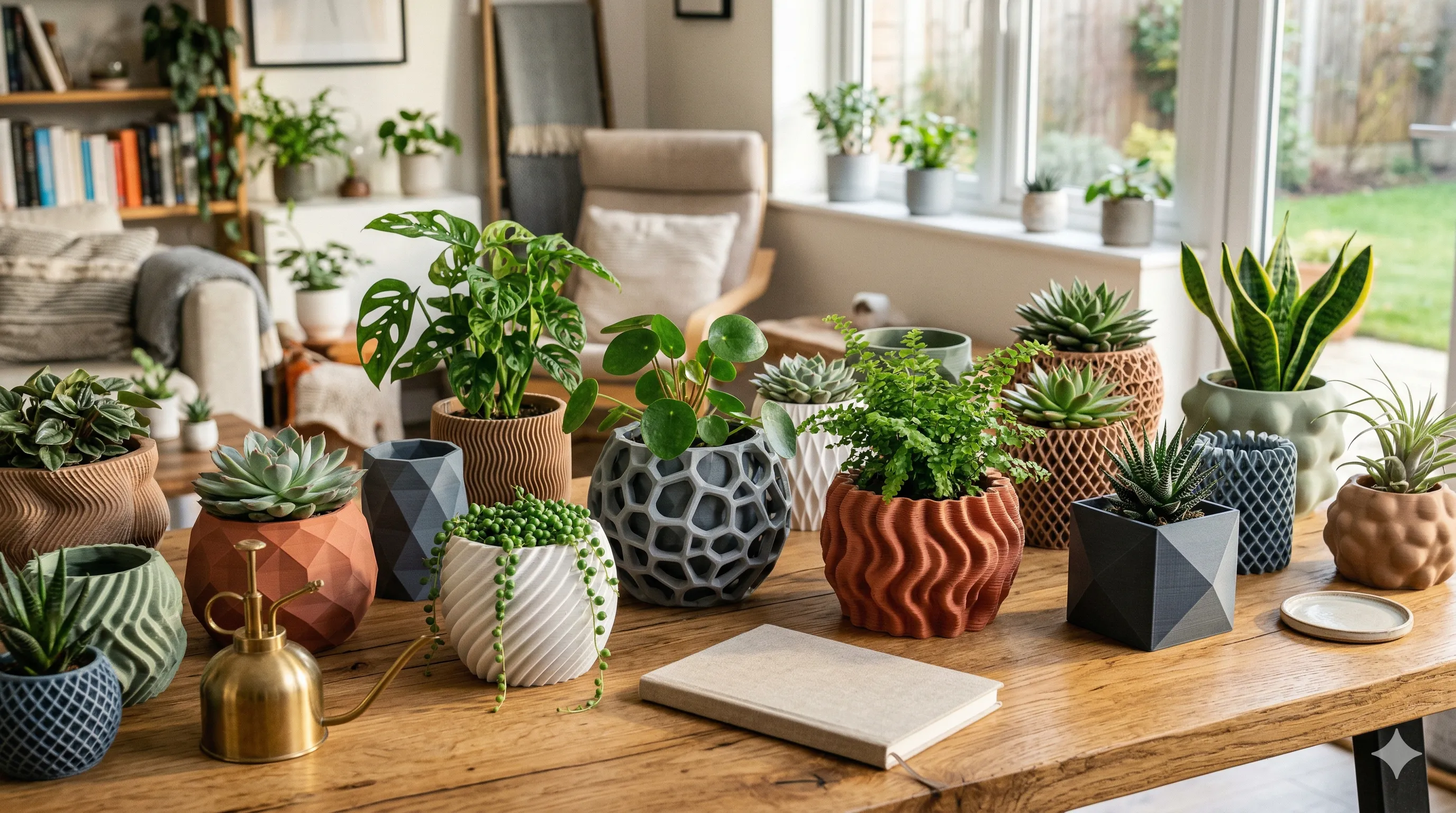
Walk into any home goods store and you'll see the same planters you've seen for decades: smooth ceramic cylinders, basic terracotta pots, maybe a woven basket if they're feeling adventurous. Plant decor has been stuck in a loop for years, cycling through the same handful of shapes and materials. That's starting to change, and the shift is being driven by 3D printing technology.
3D printed planters aren't a gimmick or a novelty. They represent a genuinely different approach to how plant accessories are designed, manufactured, and used. Here's why they're worth paying attention to.
What Exactly Is 3D Printed PLA?
Most 3D printed plant accessories are made from PLA, which stands for polylactic acid. Unlike conventional plastics derived from petroleum, PLA is made from fermented plant starches, typically corn, sugarcane, or cassava. This makes it one of the most widely used bioplastics in the world.
PLA is rigid, lightweight, and holds fine detail exceptionally well. It doesn't off-gas toxic fumes, it's food-safe in its raw form, and it's stable at normal indoor temperatures. For plant accessories, these properties translate into products that are durable enough for daily use, light enough to move easily, and capable of holding intricate design details that would be impossible in other materials.
Good to Know: PLA is biodegradable under industrial composting conditions, meaning it breaks down at high temperatures in commercial composting facilities. It won't decompose in your living room or garden, so your planters will last for years of normal use without degrading.
The Sustainability Angle
For a community that nurtures living things, the environmental footprint of plant accessories matters. Traditional ceramic planters require kiln firing at temperatures above 1000 degrees Celsius, consuming significant energy. Mass-produced plastic pots are made from petroleum-based polymers that persist in landfills for centuries. Even concrete planters carry a substantial carbon footprint from cement production.
3D printed PLA products have a meaningfully smaller environmental impact across several dimensions. The raw material is renewable and plant-derived. The manufacturing process uses electricity rather than fossil fuel combustion, and modern 3D printers are remarkably energy-efficient. There's also virtually zero material waste in 3D printing because the process is additive, building up material only where it's needed, rather than subtractive, where material is cut away and discarded.
Production waste that does occur, like support structures or failed prints, can be recycled back into filament through grinding and re-extrusion. This closed-loop potential is something traditional ceramic and plastic manufacturing simply cannot match.
Designs That Weren't Possible Before
This is where 3D printing truly separates itself from conventional manufacturing. Ceramic molds, injection molds, and slip-casting processes all impose severe constraints on what shapes are possible. Undercuts, thin walls, complex internal geometry, and organic flowing forms are either impossible or prohibitively expensive with traditional methods.
3D printing has none of these limitations. A planter can have walls that flow and undulate like flames. A tray can feature an intricate leaf vein pattern with sub-millimeter detail. Surfaces can have textures that would require hand-carving in any other medium. The design is limited by imagination and structural physics, not by the manufacturing process.
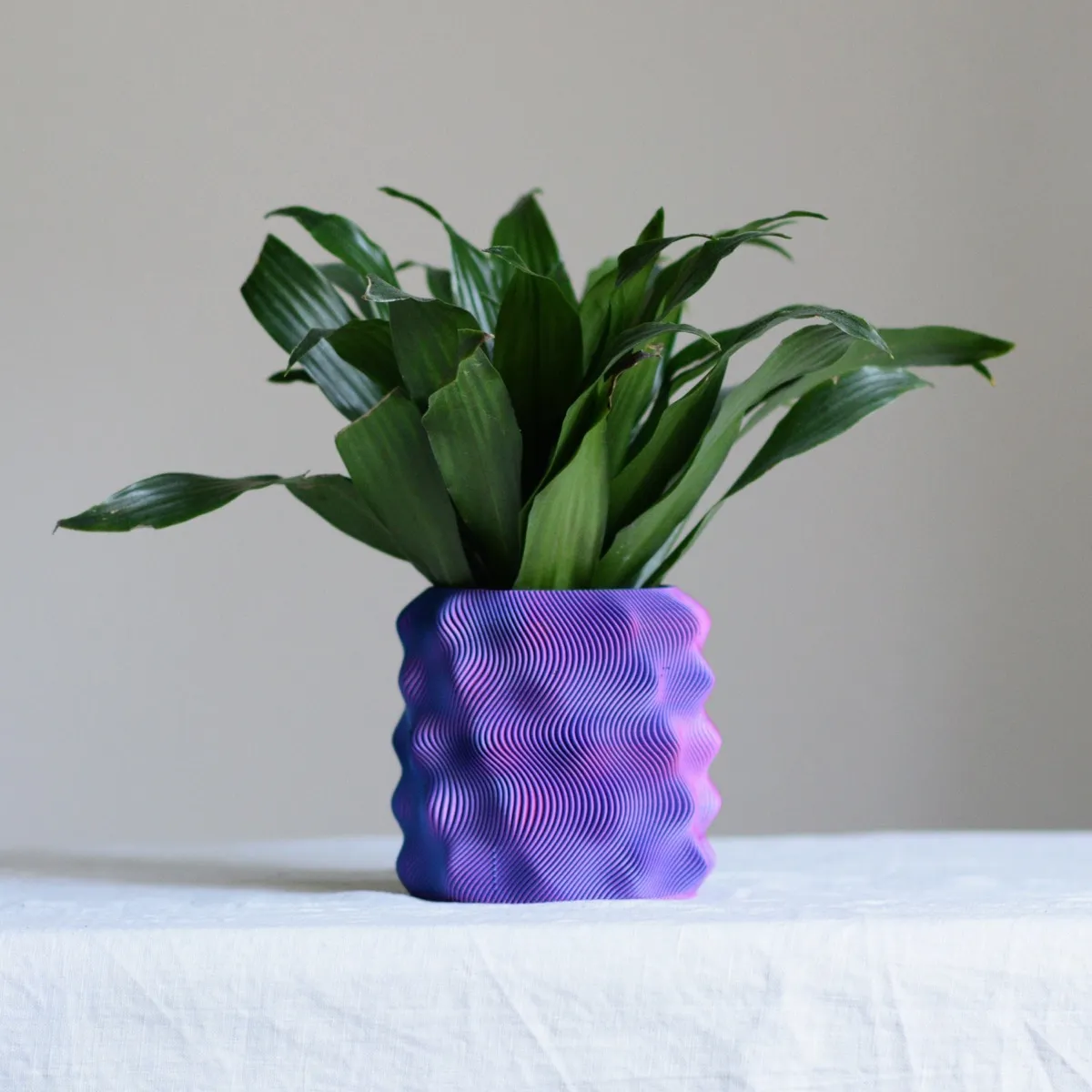
Fire Planter
Flowing, flame-inspired walls that would be impossible to create with traditional ceramic molds. A perfect example of design freedom that 3D printing enables.
This design freedom also means that small-batch production is economically viable. A ceramic factory needs to sell thousands of units to recoup the cost of creating a mold. A 3D printed design can be produced in quantities of one without any setup cost penalty. This allows designers to create niche, distinctive pieces rather than playing it safe with shapes that appeal to the broadest possible market.
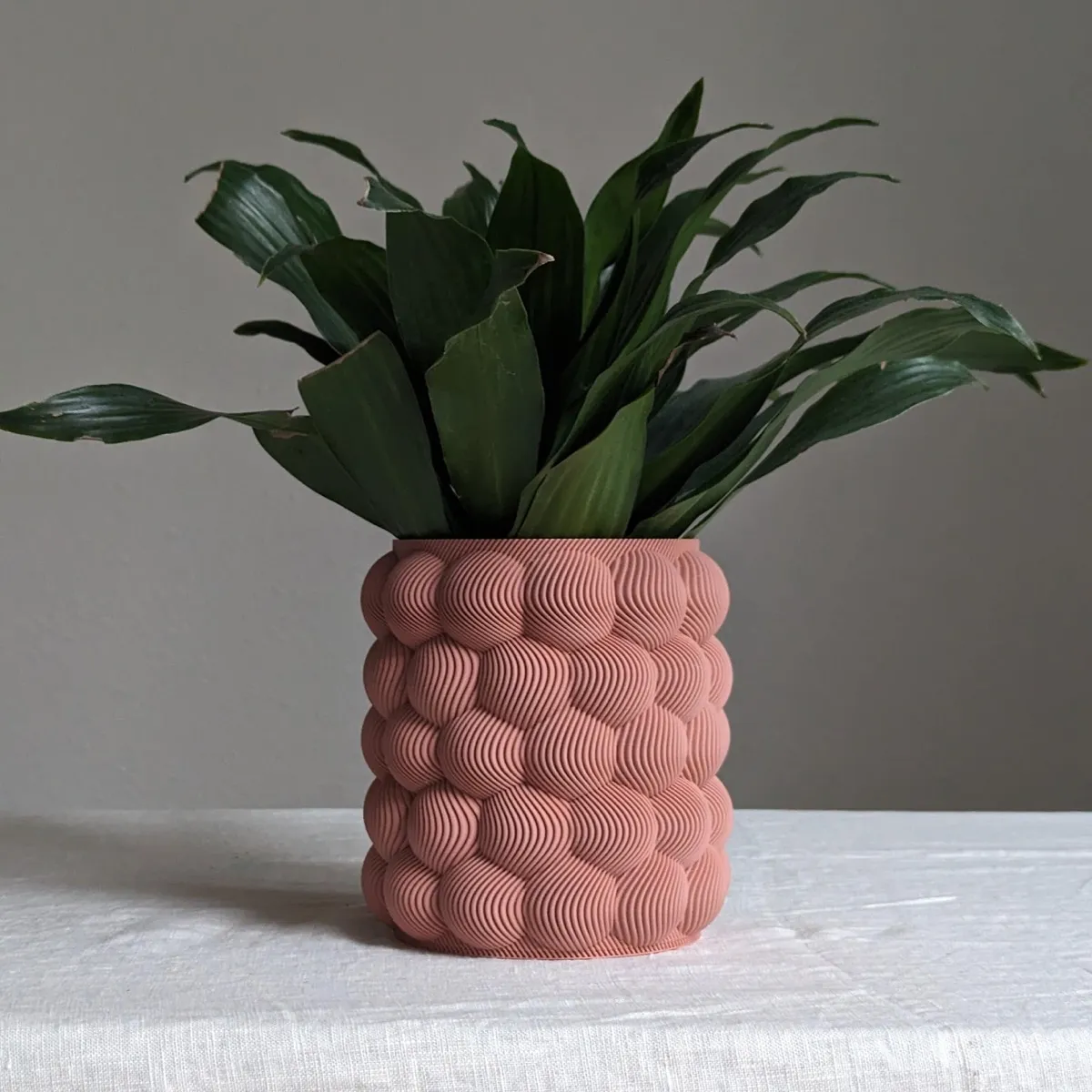
Bubble Planter
An organic, bubbly texture that creates visual depth and shadow play. The kind of surface detail that only additive manufacturing can achieve at this price point.
Customization and Color
Traditional planters come in whatever colors the manufacturer decided to produce that season. Want a matte black planter in a specific size? You might find it. Want that same design in olive green or terracotta orange? You're out of luck unless it happens to be in production.
3D printing makes color customization straightforward. PLA filament is available in hundreds of colors, from neutral tones that blend into any decor scheme to bold statement colors that become focal points. Because changing the color only requires swapping a spool of filament rather than reformulating glazes or retooling a production line, offering a wide color range is practical even for small producers.
Size customization follows the same logic. Scaling a 3D model up or down is a software operation that takes seconds. This means planters and trays can be offered in a range of sizes that's precisely calibrated to common pot dimensions, rather than the arbitrary sizing you often get with mass-produced options.
Durability and Day-to-Day Care
One of the most common questions people have about 3D printed planters is whether they hold up over time. The short answer is yes, with a few caveats worth understanding.
PLA is a rigid plastic that handles the daily demands of plant care without issue. It won't crack from the weight of wet soil, it doesn't absorb water like terracotta (which means no mineral staining), and it won't shatter if you knock it off a shelf the way a ceramic pot would. For indoor use, PLA planters are remarkably low-maintenance.
The one thing to be aware of is that PLA can soften at sustained temperatures above 60 degrees Celsius (140 degrees Fahrenheit). This means you shouldn't leave a PLA planter in a closed car on a hot summer day or place it directly against a heat source. For normal indoor conditions and even covered outdoor use in temperate climates, heat is a non-issue.
Care Tip: Clean PLA planters with a damp cloth and mild soap. Avoid abrasive scrubbers that can dull the surface finish. For mineral deposits from hard water, a quick wipe with diluted white vinegar works perfectly.
Built-In Drainage: Designed from the Start
One of the practical advantages of 3D printed planters is that drainage can be engineered directly into the design. Rather than drilling a hole in the bottom of a ceramic pot (which risks cracking) or settling for a pot without drainage (which risks root rot), 3D printed planters can incorporate precisely sized and positioned drainage holes as part of the original design.
Some designs go further, integrating raised internal floors or channels that direct water toward the drainage holes, ensuring even the edges of the soil bed drain properly. This kind of functional engineering is trivial to include in a 3D printed design but would add significant cost and complexity to traditional manufacturing.
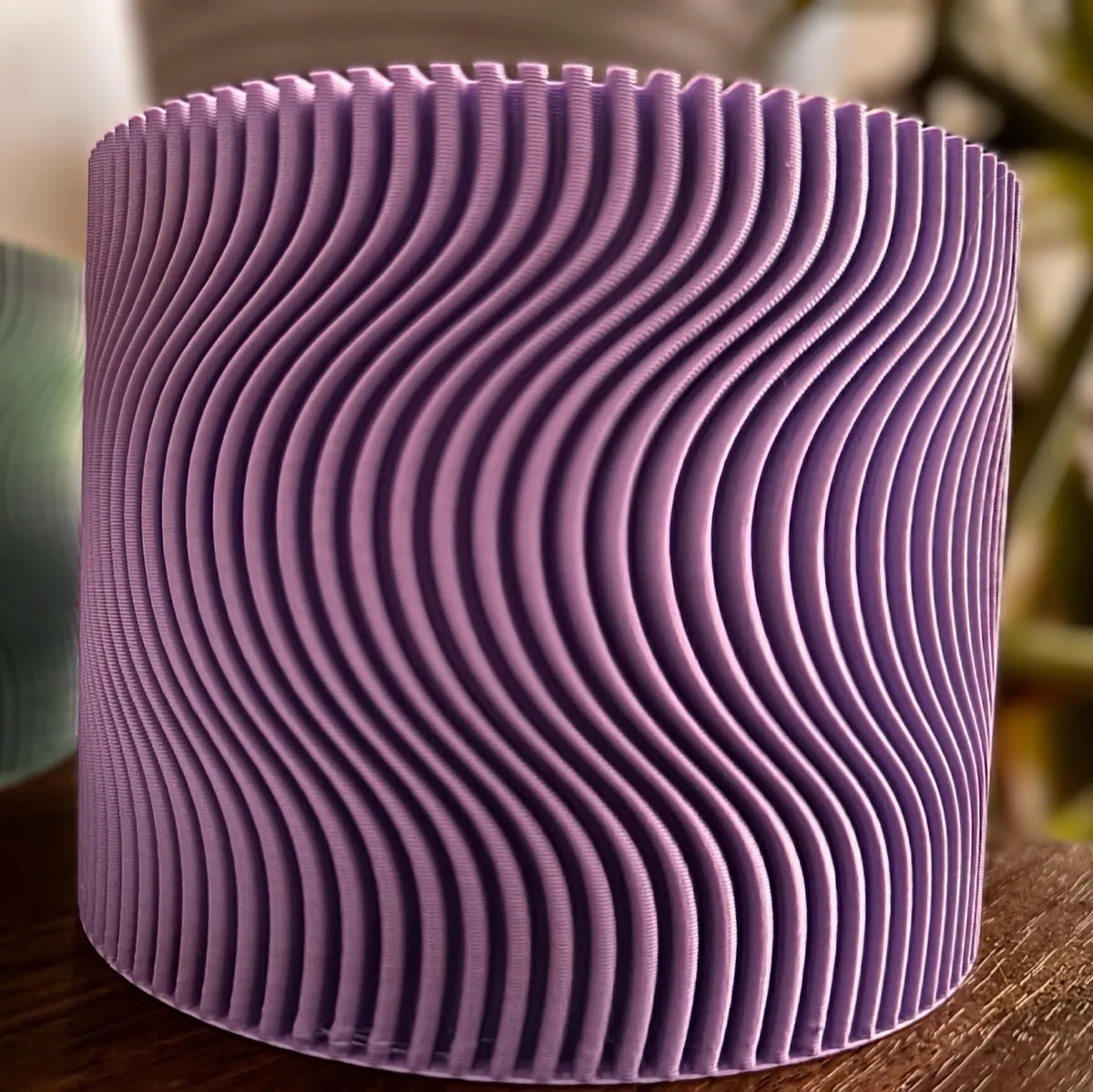
Ridged Planter
Bold vertical ridges create a striking architectural silhouette. Designed with integrated drainage and available in multiple sizes to fit your growing collection.
3D printed plant accessories are still a relatively new category, but the advantages are clear and the quality has reached a point where they stand alongside traditional materials on their own merits. For plant parents who value distinctive design, environmental responsibility, and thoughtful engineering, they represent the most interesting development in plant decor in a long time.
See 3D Printed Design in Action
The Fire Planter's flowing, flame-inspired form is only possible through 3D printing. Available in multiple colors and sizes to complement your space.
Shop the Fire Planter